Statistiche

Statistiche

venerdì 27 marzo 2015

Pi. 3.14

The number π is a mathematical constant, the ratio of a circle's circumferenceto its diameter, commonly approximated as 3.14159. It has been represented by the Greek letter "π" since the mid-18th century, though it is also sometimes spelled out as "pi" (/p/).
Being an irrational numberπ cannot be expressed exactly as a common fraction, although fractions such as 22/7 and other rational numbers are commonly used to approximate π. Consequently its decimal representationnever ends and never settles into a permanent repeating pattern. The digits appear to be randomly distributed; however, to date, no proof of this has been discovered. Also, π is a transcendental number – a number that is not the rootof any non-zero polynomial having rational coefficients. This transcendence ofπ implies that it is impossible to solve the ancient challenge of squaring the circle with a compass and straightedge.

The symbol used by mathematicians to represent the ratio of a circle's circumference to its diameter is the lowercase Greek letter π, sometimes spelled out as pi.
π is an irrational number, meaning that it cannot be written as the ratio of two integers (fractions such as 22/7 are commonly used to approximate π; no common fraction (ratio of whole numbers) can be its exact value).

lunedì 28 aprile 2014

Wonders of Norway.

Fjords of Norway.

Why the
Fjords of Norway
are special.
Glaciers slowly carved the Fjords of Norway out of hard-rock coastal mountains. The resulting narrow fjords are walled in by incredibly steep cliffs, verdant slopes and snow-capped mountain tops.
To get a sense of scale, note the boat in the photo. It may look like a modest yacht but is a large ocean-going ship.

Top 5 Fjords of Norway.

Sognefjord
If you have time to visit only one fjord, let it be Sognefjord, which is only about 70 kilometers (45 miles) north of Bergen. It stretches 204 kilometers (125 miles) inland, has stunning fjordscapes, and small villages.
Naeroyfjord
It's one of the arms of Sognefjord. Naeroyfjord, is a tourist favorite because of its narrowness and skyscraping cliffs.
Geirangerfjord
It is much farther north of Bergen (and is much shorter in length) than Sognefjord, but is worth the journey. Many Norwegians consider it to be their country's most beautiful fjord. It is blessed with many tall, cascading waterfalls (the Seven Sisters is the most striking). Partially because of its significant depth, Geirangerfjord is a pet among the large ocean going cruise ships.
Lysefjorden
It is famous for Pulpit Rock, an outlook with the grandest view in the Fjords of Norway region. It requires a long uphill hike. Standing at the edge of Pulpit Rock, you look 600 meters (2000 feet) straight down into a majestic fjord. Lysefjorden lies south of Bergen.
Hardangerfjord
Its fjordscape is dramatic, but less so than those of Sognefjord and Geirangerfjord. However, its low lying farms, orchards, and grazing slopes lend a lovely rural touch to the landscape. Hardangerfjord is south of Bergen.



lunedì 7 aprile 2014

St. George's Day.

Saint George's Day is the feast day of Saint George and the National Day for England. St. George's Day is not an official national holiday in England or the UK. It is celebrated by various Christian churches and by the several nations, kingdoms, countries, and cities of which Saint George is the patron saint. Saint George's Day is celebrated on 23 April, the traditionally accepted date of Saint George's death in AD 303. For Eastern Orthodox Churches, which use theJulian calendar, 23 April currently falls on 6 May on the Gregorian calendar.

Countries that celebrate St George's Day include Bosnia and Herzegovina, Bulgaria, Canada, Croatia, Cyprus, England, Georgia, Greece, Macedonia, Romania, and Serbia. Cities include Genoa in Italy, Beirut in Lebanon, Qormi and Victoria in Malta, Moscow in Russia, Ljubljana in Slovenia, and many others. It is also celebrated in the old Crown of Aragon in Spain — AragonCataloniaValencia, and Majorca.

Canada

 Canada St. George's Day is celebrated on 23 April. St. George's Day is not an official national holiday in Canada. It is, however, a provincial holiday in Newfoundland, where it is usually observed on the Monday nearest 23 April.

Czech Republic

 Czech Republic In the Czech Republic, Saint George's Day (svátek sv. Jiří) comes on 24 April. The reason ought to be that it was moved from 23 April because of St. Vojtěch, Czech national patron saint, who replaced him.[6] It is celebrated in a special way,.

England

 England The earliest documented mention of St. George in England comes from the venerableBede (c. 673–735). He is also mentioned in ninth-century liturgy used at Durham Cathedral[8] The will of Alfred the Great is said to refer to the saint, in a reference to the church of Fordington, Dorset. At Fordington a stone over the south door records the miraculous appearance of St. George to lead crusaders into battle.[7] Early (c. 10th century) dedications of churches to St. George are noted in England, for example at Fordingham, Dorset, at Thetford, Southwark, and Doncaster. In 1222 The Synod of Oxford declared St. George's Day a feast day in the kingdom of England. Edward III (1327–1377) put his Order of the Garter (founded c. 1348) under the banner of St. George.
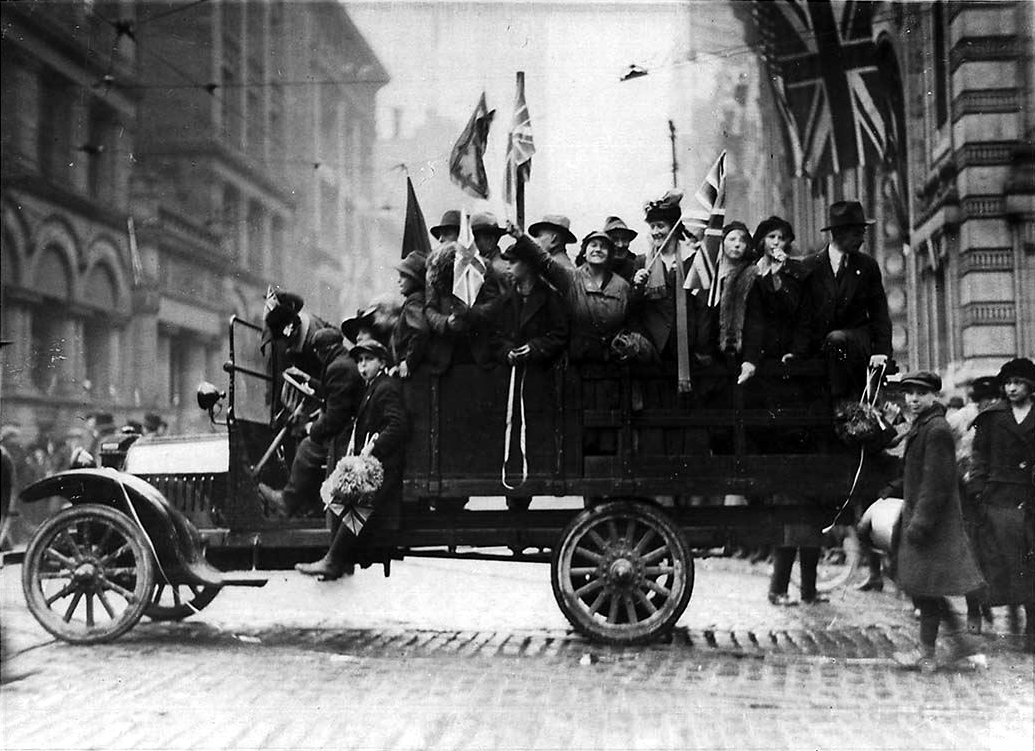
Hungary

 Hungary In Hungary, 24 April is the day of Saint George the Dragonkiller, thus it is the name day of men named György. It is also the Day of the Police, who honour him as a patron saint.

Iraq

 Iraq In Iraq the Christians celebrate this day as well; normally they would visit a church in northern Iraq (Mosul) where there is a church on the hill named after St. George; St. George Monastery (Mar Gorgies).

Jordan

Saint George's Day celebrations in Russia
Saint George's (or Jeries as named by Jordanians) Day is celebrated widely in Jordan, especially in a town near Amman called Fuheis. In Jordan, many churches are dedicated to St. George.

Lebanon

 Lebanon St George's Day is celebrated throughout Lebanon, but especially in towns and villages where churches for St George have been erected.

Portugal

 Portugal Devotions to Saint George in Portugal date back to the twelfth century, and Saint Constable attributed the victory of the Portuguese against what is now mostly modern day Spain, in the battle of Aljubarrota in the fourteenth century to Saint George. During the reign of KingJohn I (1357–1433) Saint George became the patron saint of Portugal and the King ordered that the saint's image on the horse be carried in the Corpus Christi procession. In fact, the Portuguese Army motto means Portugal and Saint George, in perils and in efforts of war.

Spain

 Spain Saint George is associated with several areas of Spain. He is the patron saint of the former Crown of Aragon, since King Peter I of Aragon won the Battle of Alcoraz with his patronage. The saint is also patron of several cities. In most cases, the reason for those cities' relation with the Saint as their holy Patron is linked to historic events which happened during the "Reconquista."

Symbols

The most widely recognized symbol of St George's Day is St George's cross. This is a red cross on a white background, which is often displayed as a flag. It is used as England's national flag, forming part of the Union Flag, the national flag of the United Kingdom of Great Britain and Northern Ireland. Saint George's cross was originally the flag of the maritime Republic of Genoa. Around 1190, the King of England started paying the Doge of Genoa to protect ships originally from the city of London and the rest of England that sailed in the Mediterranean.
During the crusades in the 1100s and 1200s, English knights used St George's cross as part of their uniform. It has been the official flag of England for centuries, but the Union Flag, a combination of St George's cross, St Andrew's cross and St Patrick's cross, is the national flag of the United Kingdom. Now Saint George's cross is used as a national symbol by fans of the English national football, rugby and cricket teams. At international matches, flags and scarves bearing this cross are worn and people paint it on their faces. It is also has a prominent place on the arms of the City of London and the flags of the city of Barcelona, Spain, and the country of Georgia.


lunedì 24 febbraio 2014

President's Day.

Happy President's Day.


Colloquially, the holiday is widely known as "Presidents Day" and is often an occasion to celebrate, or at least remember, all presidents and not just George Washington and Abraham Lincoln.

 Both Lincoln's and Washington's birthdays are in February.

 In historical rankings of Presidents of the United States both Lincoln and Washington are frequently, but not always, the top two presidents.

 Official State Holidays.

In the following states, Washington's Birthday is an official state holiday and known as:


  • President's Day in Alaska, Idaho, Maryland, Nebraska, New Hampshire, Ohio, Tennessee, Washington, West Virginia, and Wyoming.
  • Presidents' Day in Hawaii, New Mexico, Oklahoma, South Dakota, Texas, and Vermont.
  • Presidents Day in Michigan, Minnesota, Nevada, New Jersey, and Oregon.
  • Washington's Birthday/President's Day in Maine.
  • Lincoln/Washington/Presidents' Day in Arizona.
  • Lincoln's and Washington's Birthday in Montana.
  • Washington and Lincoln Day in Utah.
  • Washington–Lincoln Day in Colorado.
  • Recognition of the birthday of George Washington in North Dakota.
  • George Washington Day in Virginia.
  • George Washington's Birthday and Daisy Gatson Bates Day in Arkansas.

lunedì 2 dicembre 2013

Christmas.

Merry Christmas! 


Christmas is both a sacred religious holiday and a worldwide cultural and commercial phenomenon. For two millennia, people around the world have been observing it with traditions and practices that are both religious and secular in nature. Christians celebrate Christmas Day as the anniversary of the birth of Jesus of Nazareth, a spiritual leader whose teachings form the basis of their religion. Popular customs include exchanging gifts, decorating Christmas trees, attending church, sharing meals with family and friends and, of course, waiting for Santa Claus to arrive. December 25–Christmas Day–has been a federal holiday in the United States since 1870.


Christmas Tree Story.


Long before the advent of Christianity, plants and trees that remained green all year had a special meaning for people in the winter. Discover the history of the Christmas tree, from the earliest winter solstice celebrations, to Queen Victoria and all the way to the annual lighting of the Rockefeller Center tree.


Santa Claus.


The man we know as Santa Claus has a history all his own. Today, he is thought of mainly as the jolly man in red, but his story stretches all the way back to the third century.

Santa Claus, also known as Saint Nicholas, Father Christmas, Kris Kringle and simply "Santa", is a figure with legendary, mythical, historical and folkloric origins who, in manywestern cultures, is said to bring gifts to the homes of the good children on the night beforeChristmas, December 24. However in some European countries children receive their presents on St. Nicholas' Day, December 6.


The modern figure of Santa Claus was derived from the Dutch figure of Sinterklaas, which, in turn, was part of its basis in hagiographicaltales concerning the historical figure of Christian bishop and gift giver Saint Nicholas. During the Christianization of Germanic Europe, this figure may have absorbed elements of the godOdin, who was associated with the Germanic pagan midwinter event of Yule and led theWild Hunt, a ghostly procession through the sky.


Thanksgiving Day.

Thanksgiving Day. 


Thanksgiving Day (Jour de l'Action de grâce in Canadian French) is a national holidaycelebrated primarily in the United States and Canada as a day of giving thanks for the blessing of the harvest and of the preceding year. Several other places around the world observe similar celebrations. It is celebrated on the fourth Thursday of November in the United States and on the second Monday of October in Canada. Thanksgiving has its historical roots in religious and cultural traditions, and has long been celebrated in asecular manner as well.


Observed by United States
 Canada
 Liberia
 Puerto Rico
 Norfolk Island
 Grenada[1]
TypeNational, cultural
Date2nd Monday in October (Canada)
1st Thursday in November (Liberia)
Last Wednesday in November (Norfolk Island)
Fourth Thursday in November (USA)
2013 date
October 14, 2013 (Canada);
November 7, 2013 (Liberia);
November 27, 2013 (Norfolk Island);
November 28, 2013 (USA)
2014 date
October 13, 2014 (Canada);
November 6, 2014 (Liberia);
November 26, 2014 (Norfolk Island);
November 27, 2014 (USA, Puerto Rico)

In the English tradition, days of thanksgiving and special thanksgiving religious services became important during the English Reformation in the reign of Henry VIII and in reaction to the large number of religious holidays on the Catholic calendar. Before 1536 there were 95 Church holidays, plus 52 Sundays, when people were required to attend church and forego work and sometimes pay for expensive celebrations. The 1536 reforms reduced the number of Church holidays to 27, but some Puritans, the radical reformers of their age, wished to completely eliminate all Church holidays, including Christmas and Easter. The holidays were to be replaced by specially called Days of Fasting or Days of Thanksgiving, in response to events that the Puritans viewed as acts of special providence. Unexpected disasters or threats of judgement from on high called for Days of Fasting. Special blessings, viewed as coming from God, called for Days of Thanksgiving. 

For example, Days of Fasting were called on account of drought in 1611, floods in 1613, and plagues in 1604 and 1622. Days of Thanksgiving were called following the victory over the Spanish Armada in 1588 and following the deliverance ofQueen Anne in 1705. An unusual annual Day of Thanksgiving began in 1606 following the failure of the Gunpowder Plot in 1605 and developed into Guy Fawkes Day.


 “We often take for granted the very things that most deserve our gratitude.” –Cynthia Ozick


Missing U.


''This is the tale of the letter named I,
A lonely author who lived life with a sigh.
Follow along with I as she journeys to discover her missing U!''


This story, taken from a computer graphic video, talks about the letter ''I'' that can't find her ''U''. There were clouds without ''U'',so she starts a journey to find her missing letter, from the urban chaos to a cliff, near the sea. She jumps on a ship and she land on a ''J_ngle'', facing her fears through her way. After that, she finds Umbrellas, Ukuleles and even a Ufo. 
''You're welcome the stay, but you won't see much here. When the B_rds flew away [...] and F_sh are long gone, no [...] P_e, there's plenty of sorrow, but not even... I.''
''I'' and ''U'' finally found each other and that was the day that ''I and U'' became ''We.''


This story was incredibly amazing, emotional and well done. A Story that how love can be a great way to find each other and stay ''Together.'' 


lunedì 11 novembre 2013

Veterans Day. Armistice Day.

                                                                Veterans Day.


"To us in America, the reflections of Armistice Day will be filled with solemn pride in the heroism of those who died in the country's service and with gratitude for the victory, both because of the thing from which it has freed us and because of the opportunity it has given America to show her sympathy with peace and justice in the councils of the nations."

U.S. President Woodrow Wilson.

Veterans Day is an official United States holiday which honors people who have served in armed service, also known as veterans. It is a federal holiday that is observed on November 11. It coincides with other holidays such as Armistice Day and Remembrance Day, which are celebrated in other parts of the world and also mark the anniversary of the end of World War I

(Major hostilities of World War I were formally ended at the 11th hour of the 11th day of the 11th month of 1918, when the Armistice with Germany went into effect.)


'' I'm a Soldier and I'm marching on.''


Armistice Day (which coincides with Remembrance Day and Veterans Day, public holidays) is commemorated every year on 11 November to mark the armistice signed between the Allies of World War I and Germany at CompiègneFrance, for the cessation of hostilities on the Western Front of World War I, which took effect at eleven o'clock in the morning—the "eleventh hour of the eleventh day of the eleventh month" of 1918. While this official date to mark the end of the war reflects the ceasefire on the Western Front, hostilities continued in other regions, especially across the former Russian Empire and in parts of the old Ottoman Empire.
The date was declared a national holiday in many allied nations, to commemorate those members of the armed forces who were killed during war. An exception is Italy, where the end of the war is commemorated on 4 November, the day of the Armistice of Villa Giusti. In the Netherlands World War I is not commemorated as the country remained neutral.


Observed byNew ZealandFranceBelgiumand Serbia; and by other countries that use a different name
            
SignificanceCommemoration of the armistice signed between the Allies of World War I and Germany at Compiègne, France, for the cessation of hostilities on the Western Front of World War I
Date11 November
Next time11 November 2013
Frequencyannual
Related toAlso called Remembrance Dayand Veterans Day; and related toRemembrance Sunday